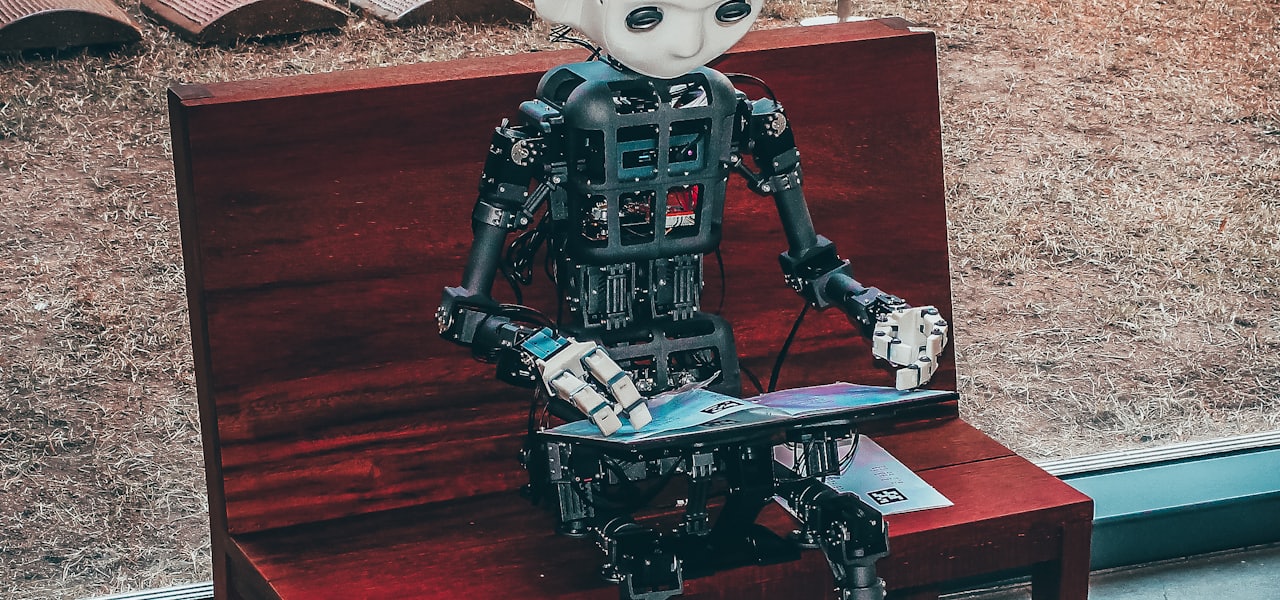
Incremental heuristic search algorithms combine both incremental and heuristic search to speed up searches of sequences of similar search problems, which is important in domains that are only incompletely known or change dynamically. Incremental search has been studied at least since the late 1960s. Incremental search algorithms reuse information from previous searches to speed up the current search and solve search problems potentially much faster than solving them repeatedly from scratch. Similarly, heuristic search has also been studied at least since the late 1960s. Heuristic search algorithms, often based on A, use heuristic knowledge in the form of approximations of the goal distances to focus the search and solve search problems potentially much faster than uninformed search algorithms. The resulting search problems, sometimes called dynamic path planning problems, are graph search problems where paths have to be found repeatedly because the topology of the graph, its edge costs, the start vertex or the goal vertices change over time. So far, three main classes of incremental heuristic search algorithms have been developed: The first class restarts A at the point where its current search deviates from the previous one (example: Fringe Saving A). The second class updates the h-values (heuristic, i.e. approximate distance to goal) from the previous search during the current search to make them more informed (example: Generalized Adaptive A). The third class updates the g-values (distance from start) from the previous search during the current search to correct them when necessary, which can be interpreted as transforming the A search tree from the previous search into the A search tree for the current search (examples: Lifelong Planning A, D, D Lite). All three classes of incremental heuristic search algorithms are different from other replanning algorithms, such as planning by analogy, in that their plan quality does not deteriorate with the number of replanning episodes. == Applications == Incremental heuristic search has been extensively used in robotics, where a larger number of path planning systems are based on either D (typically earlier systems) or D Lite (current systems), two different incremental heuristic search algorithms.
Halloween Problem
In computing, the Halloween Problem refers to a phenomenon in databases in which an update operation causes a change in the physical location of a row, potentially allowing the row to be visited again later in the same update operation. This could even cause an infinite loop in some cases where updates continually place the updated record ahead of the scan performing the update operation. The potential for this database error was first discovered by Don Chamberlin, Pat Selinger, and Morton Astrahan in the mid-1970s, on Halloween day, while working on query optimization. They wrote a SQL query supposed to give a ten percent raise to every employee who earned less than $25,000. This query would run successfully, with no errors, but when finished all the employees in the database earned at least $25,000, because it kept giving them a raise until they reached that level. The expectation was that the query would iterate over each of the employee records with a salary less than $25,000 precisely once. In fact, because even updated records were visible to the query execution engine and so continued to match the query's criteria, salary records were matching multiple times and each time being given a 10% raise until they were all greater than $25,000. Contrary to what some believe, the name is not descriptive of the nature of the problem but rather was given due to the day it was discovered on. As recounted by Don Chamberlin: Pat and Morton discovered this problem on Halloween... I remember they came into my office and said, "Chamberlin, look at this. We have to make sure that when the optimizer is making a plan for processing an update, it doesn't use an index that is based on the field that is being updated. How are we going to do that?" It happened to be on a Friday, and we said, "Listen, we are not going to be able to solve this problem this afternoon. Let's just give it a name. We'll call it the Halloween Problem and we'll work on it next week." And it turns out it has been called that ever since.
MyRadar
MyRadar is a free weather forecasting application developed by Andy Green and his Orlando, Florida-based company ACME AtronOmatic (ACME). The app began operations in 2008 and ran on government-provided weather and radar data for its first decade. In 2019, ACME launched personal satellites to improve predictions of ongoing weather. The app received funding to improve its radar and imaging from the Federal Communications Commission (FCC), National Oceanic and Atmospheric Administration (NOAA), and the Office of Naval Research (ONR). ACME created a weather data satellite constellation named "Hyperspectral Orbital Remote Imaging Spectrometer" (HORIS), which utilizes machine learning and artificial intelligence (AI) to create a current weather map. With the introduction of additional features, including the detection of wildfires and illegal fishing, the app has more broadly become an environmental intelligence app since 2022. In 2024, the app partnered with the Total Traffic and Weather Network (TTWN) to provide traffic flow and incident data for users with paying subscriptions via CarPlay and Android Auto. == History == The app's creator, Andy Green, had created internet tech since the 1980s. His first major project was the development of a public access internet service company based in Rhode Island, which he later sold to finance the creation of ACME AtronOmatic ("ACME" for short), based in Orlando, Florida. The first major app created by ACME was called "Flightwise", which provided users with flight tracking information. In summer 2008, Green had the idea to use the animated location tracker already built-in to Flightwise to make a stand-alone weather forecasting app after wondering if a meal he was eating outdoors would get rained out. MyRadar was launched in 2012 out of an office in Orlando. Despite running solely off of free government-provided weather and radar data for the first decade after launch, Green said the app "took off like wildfire" in downloads. In December 2017, the app partnered with "TripIt" to provide users with information about flight delays and gate changes, eliminating the need for a separate app like Flightwise. In 2019, ACME launched their first personal satellite for the app, a small prototype from New Zealand, as part of an effort to provide detailed imagery and improved predictions of ongoing weather unique to the app. More satellites were eventually launched by ACME to create a weather data satellite constellation named "Hyperspectral Orbital Remote Imaging Spectrometer" (HORIS), monitored by ground stations maintained by Kongsberg Satellite Services. HORIS operates MyRadar by taking the environmental data and imagery it collects and pairing it with machine learning and artificial intelligence (AI) to create a real-time weather map. In 2022, HORIS was expanded upon after ACME won approval from the Federal Communications Commission (FCC) to improve their satellite constellation to include 250 satellites or more. The main batch of satellites were PocketQubes, which entered the atmosphere on May 2, 2022, by Rocket Lab Electron launched from New Zealand, with the additional purpose to test and validate the existing satellites in orbit. In October 2022, ACME received a US$150,000 Small Business Innovation Research (SBIR) grant from the National Oceanic and Atmospheric Administration (NOAA) to improve the app's wildfire detection and air quality measurement technology to better detect smoke, aerosols, fire hotspots using satellites and aerial drones. On August 18, 2023, phase two of the NOAA grant was approved, providing an additional US$650,000 to aid in the app's aforementioned goals by launching a pair of CubeSat satellites to provide high-definition infrared imagery. On September 8, 2023, ACME secured another US$1,200,000 in crowd funding to aid accomplishing the goals of the NOAA grant by expanding the app's workforce from 35 to 100 employees by the end of 2024. In January 2024, MyRadar partnered with Total Traffic and Weather Network (TTWN) to provide traffic data overlaid with its pre-existing weather graphics for users in the United States. The partnership allowed for the app to additionally become a tool for navigation. This officially became a feature days later on January 8, 2024, when the app was made compatible with Apple's CarPlay. On February 7, 2024, the Android equivalent Android Auto also gained the ability to display the app on car interfaces. In March 2024, the app launched a "meteorological wedding planning service" in the United States and Canada for prices between US$1,000 and US$5,000, in which users can request a personal meteorologist to provide an in-person meeting about the best dates for a wedding, and on-call local weather updates the day of. Scheduled for February 2025, four more satellites to help with the NOAA-sponsored wildfire detection are to be launched, and the first by ACME to have AI processing in the satellites themself and not computers on the ground, allowing for quicker transfer of information. == Features and general information == The app's primary function is to provide weather forecasting and prediction to users. The app includes toggleable options to track and send alerts to users for rain, wind patterns, earthquakes, tornadoes, tropical cyclones, wildfires, and more. In early 2020, a feature was added to track orbital objects such as the International Space Station. In May 2022, with the imagery improvement of HORIS, the app gained the secondary abilities to better monitor algae blooms, coral reefs, illegal fishing, and wildfires. In January and February 2024, the ability to display traffic flow and incident data in a feature called "RouteCast" was added, and can be displayed in video and 3D options via CarPlay and Android Auto for users with paying subscriptions. The app also provides annual tropical storm and tornado outlooks for their respective seasons, gathered through satellite and aerial drone data, as well as through on the ground storm chasers.
Scanimate
Scanimate is an analog computer animation (video synthesizer) system created by Lee Harrison III of Denver, Colorado. Harrison had developed its predecessor, ANIMAC, which generated used a motion capture system, based on a body suit with potentiometers. In contrast, Scanimate included TV technology. Scanimate's successor was called Caesar, and used a digital computer to control the analog system. The eight Scanimate systems were used to produce much of the video-based animation seen on television between most of the 1970s and early 1980s in commercials, promotions, and show openings. One of the major advantages the Scanimate system had over film-based animation and computer animation was the ability to create animations in real time. The speed with which animation could be produced on the system because of this, as well as its range of possible effects, helped it to supersede film-based animation techniques for television graphics. By the mid-1980s, it was superseded by digital computer animation, which produced sharper images and more sophisticated 3D imagery. Animations created on Scanimate and similar analog computer animation systems have a number of characteristic features that distinguish them from film-based animation: the motion is extremely fluid, using all 60 fields per second (in NTSC format video) or 50 fields (in PAL format video) rather than the 24 frames per second that film uses; the colors are much brighter and more saturated; and the images have a very "electronic" look that results from the direct manipulation of video signals through which the Scanimate produces the images. == How it works == A special high-resolution (around 945 lines) monochrome camera records high-contrast artwork. The image is then displayed on a high-resolution screen. Unlike a normal monitor, its deflection signals are passed through a special analog computer that enables the operator to bend the image in a variety of ways. The image is then shot from the screen by either a film camera or a video camera. In the case of a video camera, this signal is then fed into a colorizer, a device that takes certain shades of grey and turns it into color as well as transparency. The idea behind this is that the output of the Scanimate itself is always monochrome. Another advantage of the colorizer is that it gives the operator the ability to continuously add layers of graphics. This makes possible the creation of very complex graphics. This is done by using two video recorders. The background is played by one recorder and then recorded by another one. This process is repeated for every layer. This requires very high-quality video recorders (such as both the Ampex VR-2000 or IVC's IVC-9000 of Scanimate's era, the IVC-9000 being used quite frequently for Scanimate composition due to its very high generational quality between re-recordings). == Current usage == Two of the Scanimates are still in use at ZFx studios in Asheville, North Carolina. The original "Black Swan" R&D machine has been updated with more modern power supplies and can produce material in standard or 1080P high definition video. The "white Pearl" machine is the last one produced and is being kept in its original configuration for historical purposes by David Sieg at ZFx inc. The machines are installed in a working production environment with Grass Valley switchers, Kaleidoscope digital video effects systems, and Accom digital disk recorders for layering. == Use in television, music and films == === Music videos === Let's Groove by Earth, Wind & Fire Get Down on It by Kool & the Gang Blame It on the Boogie by The Jacksons Knock on Wood by Amii Stewart Popcorn Love by New Edition === TV programs/movies === === TV channels/home video/TV productions ===
User-defined function
A user-defined function (UDF) is a function provided by the user of a program or environment, in a context where the usual assumption is that functions are built into the program or environment. UDFs are usually written for the requirement of its creator. == BASIC language == In some old implementations of the BASIC programming language, user-defined functions are defined using the "DEF FN" syntax. More modern dialects of BASIC are influenced by the structured programming paradigm, where most or all of the code is written as user-defined functions or procedures, and the concept becomes practically redundant. == COBOL language == In the COBOL programming language, a user-defined function is an entity that is defined by the user by specifying a FUNCTION-ID paragraph. A user-defined function must return a value by specifying the RETURNING phrase of the procedure division header and they are invoked using the function-identifier syntax. See the ISO/IEC 1989:2014 Programming Language COBOL standard for details. As of May 2022, the IBM Enterprise COBOL for z/OS 6.4 (IBM COBOL) compiler contains support for user-defined functions. == Databases == In relational database management systems, a user-defined function provides a mechanism for extending the functionality of the database server by adding a function, that can be evaluated in standard query language (usually SQL) statements. The SQL standard distinguishes between scalar and table functions. A scalar function returns only a single value (or NULL), whereas a table function returns a (relational) table comprising zero or more rows, each row with one or more columns. User-defined functions in SQL are declared using the CREATE FUNCTION statement. For example, a user-defined function that converts Celsius to Fahrenheit (a temperature scale used in USA) might be declared like this: Once created, a user-defined function may be used in expressions in SQL statements. For example, it can be invoked where most other intrinsic functions are allowed. This also includes SELECT statements, where the function can be used against data stored in tables in the database. Conceptually, the function is evaluated once per row in such usage. For example, assume a table named Elements, with a row for each known chemical element. The table has a column named BoilingPoint for the boiling point of that element, in Celsius. The query would retrieve the name and the boiling point from each row. It invokes the CtoF user-defined function as declared above in order to convert the value in the column to a value in Fahrenheit. Each user-defined function carries certain properties or characteristics. The SQL standard defines the following properties: Language - defines the programming language in which the user-defined function is implemented; examples include SQL, C, C# and Java. Parameter style - defines the conventions that are used to pass the function parameters and results between the implementation of the function and the database system (only applicable if language is not SQL). Specific name - a name for the function that is unique within the database. Note that the function name does not have to be unique, considering overloaded functions. Some SQL implementations require that function names are unique within a database, and overloaded functions are not allowed. Determinism - specifies whether the function is deterministic or not. The determinism characteristic has an influence on the query optimizer when compiling a SQL statement. SQL-data access - tells the database management system whether the function contains no SQL statements (NO SQL), contains SQL statements but does not access any tables or views (CONTAINS SQL), reads data from tables or views (READS SQL DATA), or actually modifies data in the database (MODIFIES SQL DATA). User-defined functions should not be confused with stored procedures. Stored procedures allow the user to group a set of SQL commands. A procedure can accept parameters and execute its SQL statements depending on those parameters. A procedure is not an expression and, thus, cannot be used like user-defined functions. Some database management systems allow the creation of user defined functions in languages other than SQL. Microsoft SQL Server, for example, allows the user to use .NET languages including C# for this purpose. DB2 and Oracle support user-defined functions written in C or Java programming languages. === SQL Server 2000 === There are three types of UDF in Microsoft SQL Server 2000: scalar functions, inline table-valued functions, and multistatement table-valued functions. Scalar functions return a single data value (not a table) with RETURNS clause. Scalar functions can use all scalar data types, with exception of timestamp and user-defined data types. Inline table-valued functions return the result set of a single SELECT statement. Multistatement table-valued functions return a table, which was built with many TRANSACT-SQL statements. User-defined functions can be invoked from a query like built‑in functions such as OBJECT_ID, LEN, DATEDIFF, or can be executed through an EXECUTE statement like stored procedures. Performance Notes: User-defined functions are subroutines made of one or more Transact-SQL statements that can be used to encapsulate code for reuse. It takes zero or more arguments and evaluates a return value. Has both control-flow and DML statements in its body similar to stored procedures. Does not allow changes to any Global Session State, like modifications to database or external resource, such as a file or network. Does not support output parameter. DEFAULT keyword must be specified to pass the default value of parameter. Errors in UDF cause UDF to abort which, in turn, aborts the statement that invoked the UDF. === Apache Hive === Apache Hive defines, in addition to the regular user-defined functions (UDF), also user-defined aggregate functions (UDAF) and table-generating functions (UDTF). Hive enables developers to create their own custom functions with Java. === Apache Doris === Apache Doris, an open-source real-time analytical database, allows external users to contribute their own UDFs written in C++ to it.
Play Integrity API
Play Integrity API (formerly known as SafetyNet) consists of several application programming interfaces (APIs) offered by the Google Play Services to support security sensitive applications and enforce DRM. Currently, these APIs include device integrity verification, app verification, recaptcha and web address verification. It uses an environment called DroidGuard to perform the attestation. == Attestation == The SafetyNet Attestation API, one of the APIs under the SafetyNet umbrella, provides verification that the integrity of the device is not compromised. In practice, non-official ROMs such as LineageOS fail the hardware attestation and thus prevent the user from using a non-compliant ROM with third-party apps (mainly banking) that require the API. Due to this, some consider this a monopolistic practice deterring the entrance of competing mobile operating systems in the market. It requires a network connection to Google servers and validates the hardware signatures. Amongst the checks, the API looks for bootloader unlock status, ROM signatures, kernel strings, it also uses AVB2.0 and dm-verity attestations. Upon successful checks, Google Play will mark the device as Certified. The attestation runs in an environment called DroidGuard (com.google.android.gms.unstable). The SafetyNet Attestation API (one of the four APIs under the SafetyNet umbrella) has been deprecated. As of 6 October 2023, Google planned to replace it with the Play Integrity API by the end of January 2025. The transition ended on 20 May 2025, breaking applications which hadn't been updated. These attestations are offered by Google Play Services and thus are not available on free Android environments, like AOSP. Therefore, developers can require the API to be available and may refuse to execute on AOSP builds. == Google Play Protect == Under the same umbrella, Play Protect is a mechanism to find and remove "vulnerable" apps from one's Android device as well as store apps. Although it's meant to scan for malware-containing apps, it also looks for non-DRM compliant apps. == Criticism == Multiple groups have criticised SafetyNet and the Play Integrity API. Criticisms include that it offers weaker protection compared to alternatives such as Android's hardware attestation API, which provides a stronger form of verification while having the ability to remain compatible with more secure Android operating systems like GrapheneOS. Critics argued it undermines competition by effectively requiring developers to rely on Google's proprietary services, strengthening its monopoly over the Android ecosystem and disadvantaging alternative, privacy-focused operating systems. Users have also developed tools, such as the Play Integrity Fix module for Magisk/KernelSU/APatch, which tricks the attestation using leaked fingerprints of vulnerable devices. Furthermore, some have questioned the effectiveness of the attestation, claiming it does not deliver the level of security promised by Google and instead serves more as a form of vendor lock-in than a meaningful security measure. Activists have also raised concerns that it may violate antitrust and competition laws, like the Digital Markets Act.
Security information management
Security information management (SIM) is an information security industry term for the collection of data such as log files into a central repository for trend analysis. == Overview == SIM products generally are software agents running on the computer systems that are monitored. The recorded log information is then sent to a centralized server that acts as a "security console". The console typically displays reports, charts, and graphs of that information, often in real time. Some software agents can incorporate local filters to reduce and manipulate the data that they send to the server, although typically from a forensic point of view you would collect all audit and accounting logs to ensure you can recreate a security incident. The security console is monitored by an administrator who reviews the consolidated information and takes action in response to any alerts issued. The data that is sent to the server to be correlated and analyzed are normalized by the software agents into a common form, usually XML. Those data are then aggregated in order to reduce their overall size. == Terminology == The terminology can easily be mistaken as a reference to the whole aspect of protecting one's infrastructure from any computer security breach. Due to historic reasons of terminology evolution; SIM refers to just the part of information security which consists of discovery of 'bad behavior' or policy violations by using data collection techniques. The term commonly used to represent an entire security infrastructure that protects an environment is commonly called information security management (InfoSec). Security information management is also referred to as log management and is different from SEM (security event management), but makes up a portion of a SIEM (security information and event management) solution. == Regulatory compliance == Security information management systems support compliance with regulatory frameworks that require centralized collection and analysis of security data. The Health Insurance Portability and Accountability Act (HIPAA) Security Rule requires covered entities to implement audit controls that record and examine activity in information systems containing electronic protected health information (45 CFR 164.312(b))."45 CFR § 164.312 - Technical safeguards". Legal Information Institute. Retrieved April 1, 2026. SIM platforms aggregate these audit records to support the required regular review of information system activity records (45 CFR 164.308(a)(1)(ii)(D)). The December 2024 HIPAA Security Rule NPRM proposed requiring regulated entities to deploy automated systems capable of monitoring and recording access to ePHI, including the ability to detect unauthorized access attempts in near real-time."HIPAA Security Rule To Strengthen the Cybersecurity of Electronic Protected Health Information". Federal Register. January 6, 2025. Retrieved April 1, 2026. The Payment Card Industry Data Security Standard (PCI DSS) similarly requires centralized log management and daily review of security events (Requirements 10.4 and 10.6)."PCI DSS v4.0" (PDF). PCI Security Standards Council. March 2022. Retrieved April 1, 2026. NIST Special Publication 800-53 addresses security information management through the AU (Audit and Accountability) control family, which specifies requirements for audit event generation, content, storage, and analysis."NIST SP 800-53 Rev. 5: Security and Privacy Controls". National Institute of Standards and Technology. September 2020. Retrieved April 1, 2026.